A local demand signal
Priority audience, possible times, realistic travel and accessible alternatives.

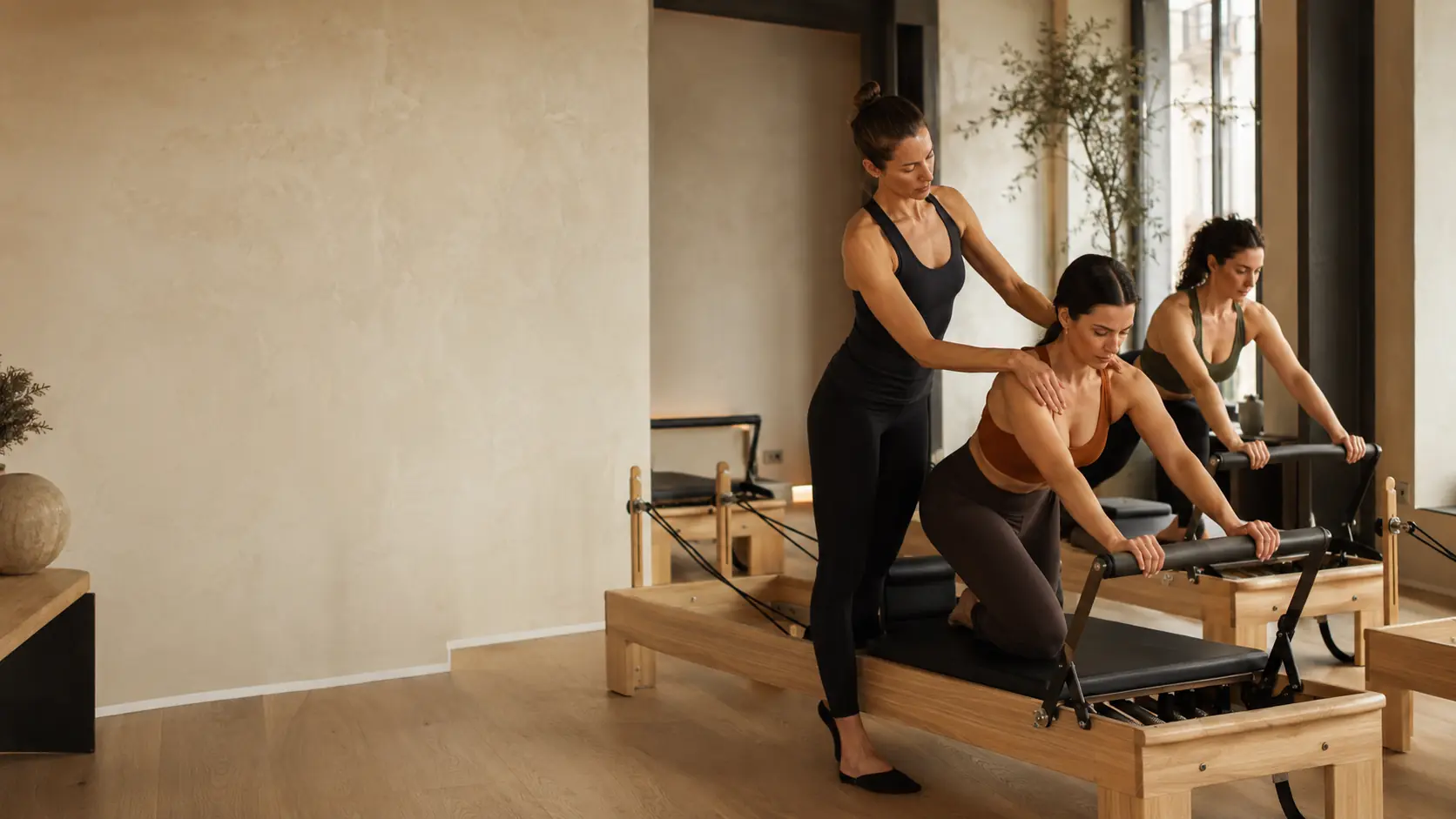
Guide · Pilates Reformer studio
Before signing a lease or ordering equipment, turn the project into verifiable assumptions: audience, capacity, scheduling, pricing, costs, cash flow and break-even.
Updated on · Source-based method · France & Switzerland
The visibility of Reformer does not demonstrate the viability of a specific location. The project must connect local demand, usable capacity and financial assumptions built from your quotes.
Priority audience, possible times, realistic travel and accessible alternatives.
Equipment, premises, safety, accessibility, teaching format and supervision.
Fit-out, equipment, team, financing and operating costs from identified sources.
Local interviews, non-binding preregistrations and several scenarios are more useful than a single forecast presented as certain.
Review the GE2studio definitionsAudience, experience, formats and a concrete point of difference.
Accessible area, preferred times and local alternatives.
Use of the premises, fit-out, public access and capacity.
Sessions, coaches, places and booking rules.
Investment, costs and cash requirements.
A conservative scenario and a slower-than-expected opening.
Capacity is built up session by session and remains distinct from bookings and subsequent attendance.
Structure the scheduleBreak-even indicates an activity level under certain assumptions. It does not tell you when payments arrive or whether cash is sufficient before opening.
The amount available to cover fixed costs.
A consistent tax basis to validate with your adviser.The ratio used to translate fixed costs into a break-even revenue threshold.
Cannot be calculated if costs are undocumented.The conditional level at which the contribution margin covers fixed costs.
It is neither a guarantee of demand nor a cash-flow budget.An operational interpretation when attributable revenue per attendance is defensible.
Packs and subscriptions require a consistent convention.In France, have the premises' use, fit-out, accessibility and public-building safety requirements assessed. Paid instruction in physical or sporting activities is governed in particular by Article L.212-1 of the French Sports Code: check the scope of the qualification or title, registration and professional licence. In Switzerland, check municipal, cantonal and federal obligations separately.
This guide does not constitute legal, tax, property or financial advice. Obligations vary with the jurisdiction, premises, activity and chosen organisation.
Copy these four headings into your preparation document. For each, record your assumption, supporting evidence and the point still to confirm. An empty field remains an open question.
Then build the forecastAssumption: audience, area and preferred times to specify. Evidence: dated observations or interviews. To confirm: what represents stated interest and what constitutes a real commitment.
Assumption: the number of places that can actually be used. Evidence: floor plan, visit and obtained approvals. To confirm: the constraint that effectively limits capacity.
Assumption: sessions, times and capacity per session. Evidence: working schedule and confirmed availability. To confirm: cover arrangements, closures and gradual ramp-up.
Assumption: payment amounts and dates. Evidence: identified quotes and financing schedule. To confirm: missing items and the effect of a delayed opening.
The conservative schedule progressively covers break-even and the purchase–booking–attendance journey has been tested.
Commercial rules, replacement costs and cash-collection delays must be visible.
Sources consulted on 27 August 2026. Check the version in force before making any decision.
There is no defensible universal budget. The amount depends on the premises, fit-out, number and type of machines, team, insurance, financing and initial cash reserves, among other factors. Use dated quotes and test several scenarios.
The right number cannot be inferred from a market average. It depends on documented local demand, validated premises capacity, supervision, a conservative schedule and the project's own break-even point.
Separate fixed and variable costs, calculate the contribution margin ratio, then divide fixed costs by that ratio. The result can then be expressed in attendances and occupancy rate if average revenue per attendance can be calculated consistently.
Paid instruction in physical or sporting activities is regulated by Article L.212-1 of the French Sports Code. Check the exact scope of each instructor's qualification or title, registration and professional licence with the competent authority.
Before presales and publishing the schedule. Offers, entitlements, bookings, cancellations, attendance, refunds and data processing must be testable before being presented to prospective members.
Gather capacity, expected attendance, attributable revenue and class costs. The calculator estimates its contribution and break-even attendance; it does not replace the studio's complete budget.